How the Bolashak Program and a Master’s Degree Changed My Life Trajectory
Many perceive education as a formal stage—a diploma that sits on a shelf. But for me, studying was not just about getting a piece of paper; it was a complete dismantling of my old self and the assembly of a new, global identity. Today, looking at the fjords from my office window in Norway, I remember 2015 in Astana. Between these two points lies a path paved through ambition, the "Bolashak" program, and the belief that international standards are achievable for everyone.
Point A: Theory and Big Dreams
In 2015, I graduated from the L.N. Gumilyov Eurasian National University with a degree in Management. I had a diploma, a basic understanding of business, and a burning desire to prove to myself that I was capable of more. However, the reality was this: in the labor market, I was "one of many." My theoretical foundation was solid, but I lacked practical weight. That same year, I made perhaps the most important decision of my life—I applied for the "Bolashak" scholarship. In December 2015, the confirmation arrived: I had become a scholar. This was my "golden ticket," though I didn't yet realize which door it was opening.
Canadian Breakthrough: University of Toronto
My journey into the global world began in 2016 with a three-month language program at the University of Toronto. Canada welcomed me with multiculturalism and a completely different approach to learning. Later, in 2017, I enrolled there for a Master’s degree in Human Resources and Industrial Relations.
Why does this matter? The University of Toronto is ranked among the world's top universities (29th in the QS World University Rankings). There, we were taught not just to "manage personnel," but to understand HR as a science of data, psychology, and business strategy. The "Bolashak" program gave me access to the best professors and practices that are decades ahead of the approaches we are used to. It was there that the foundation of my future competitiveness was formed.
Returning Home: Expectations vs. Reality
In 2019, having returned to Kazakhstan with a Master’s degree, I joined my alma mater, the L.N. Gumilyov Eurasian National University, but this time in the role of an HR specialist.
My "Point A" in my career looked like this:
- Position: HR Specialist at a university.
- Salary: Average for Kazakhstan.
- Background: A vast theoretical base from Canada, but a lack of corporate experience.
I began implementing what I had learned in Toronto. Later, I moved into the civil service at the Department of Presidential Affairs of the Republic of Kazakhstan. The "Bolashak" diploma and a Master’s from a top-tier university worked instantly—I was hired without unnecessary questions, as this brand is an unconditional mark of quality in Kazakhstan. However, I realized that to truly "unpack" my potential and reach a global income level, I needed the school of major international business.
TCO: A Bridge to the Wider World
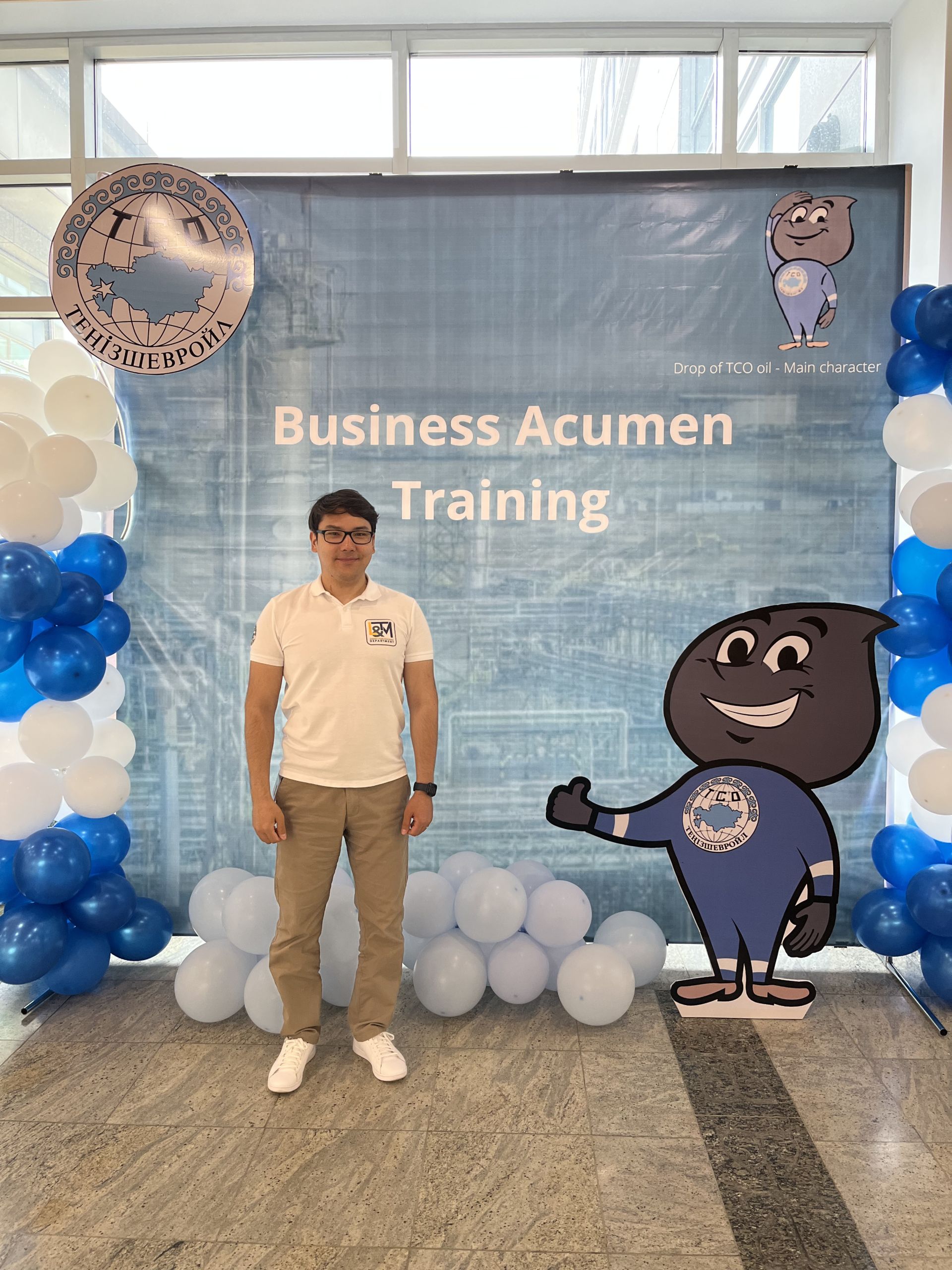
In 2021, I joined Tengizchevroil (TCO) — an industrial giant operating according to the highest Western standards. If my Master’s in Toronto gave me the "entry ticket" to the profession, TCO was the place where that knowledge was put to the test.
Working at TCO is like going through school at the head office of Apple or Google, but in the energy sector. Why was this experience decisive for my international career?
-
- Global Protocols: There is no room for "maybe" here. Every process — from HR administration to safety protocols — is calibrated to the second and complies with Chevron’s global regulations.
- Technological Leadership: It was at TCO that I moved from theory to practice with cutting-edge IT solutions: the Workday cloud system, analytics in Power BI, and international coaching practices.
- Multicultural Environment: Specialists who have gone through the "Tengiz school" are highly valued in Europe and the USA. We don’t need to be taught how to work in an international team — we live in one.
In the Learning & Talent Management department, my Master’s degree began working at 100%. I realized that HR is about numbers and strategic logic. TCO became an "accelerator" for me: by 2025, my market value had increased manifold, and my income became competitive on a global scale.
Important Insight: A "Bolashak" education gives you the "entry ticket," but it is in international companies like TCO that this ticket turns into real skills. By 2025, I became a specialist whose market value had grown several times over. My salary was no longer "average" — it became competitive at an international level.
Point B: Norway and Global Recognition
In 2024, life presented me with a new challenge—the birth of my son. This became a trigger: I wanted to try my hand at the global market. I began actively searching for work via LinkedIn. In 2025, I received an offer from Jotun for the position of HR Data Analyst at their headquarters in Norway; I later learned that over 100 candidates from all over the world had applied for this spot.
Why did they choose me? During the final interview, the Group Vice President of HR said it directly: the deciding factors were my international degree (University of Toronto), my deep understanding of HR, and my experience at TCO.
My "Point B" today:
- Location: Sandefjord, Norway.
- Company: Jotun (presence in 100+ countries, 40 factories).
- Status: A sought-after expert in the global labor market.
- Income: A
Articles
Read also